.png)
Stuck TXV Valve: What a Restricted Evaporator Coil Looks Like in Real Time
Updated: Apr 7

When homeowners call because their AC is running but not cooling, the first thought is often low refrigerant. But sometimes the problem is not a leak at all. Sometimes the issue is a restriction, and one of the most common restrictions we see is a stuck TXV valve.
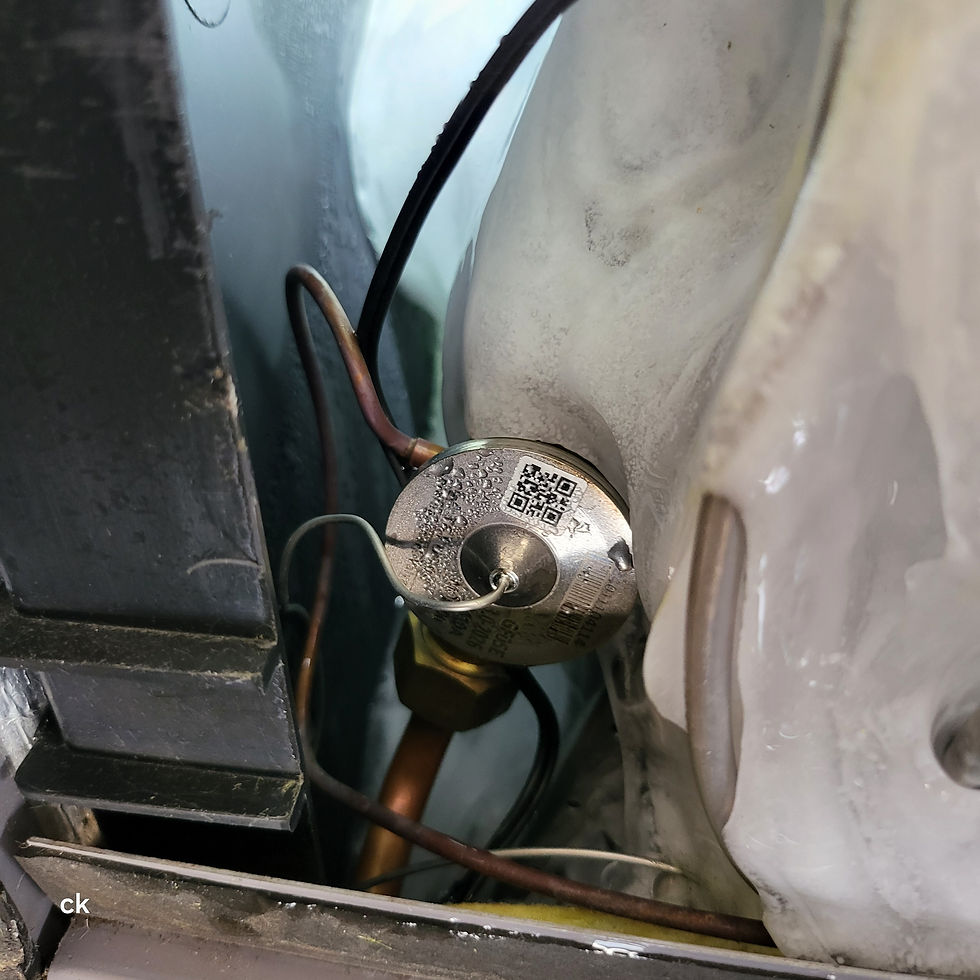
On a recent service call, Tech Darin opened up the evaporator coil and found heavy ice buildup caused by a TXV valve that was not allowing refrigerant to flow the way it should. The photos from this job show exactly what a restricted coil can look like in real time and why this kind of problem can bring cooling to a stop fast.
What Is a TXV Valve?
A TXV valve, or thermostatic expansion valve, regulates how much refrigerant enters the evaporator coil. Its job is to meter refrigerant flow based on system demand so the coil can absorb heat properly and cool your home efficiently.
You can think of it like a control point for refrigerant. When it is working properly, the coil gets the right amount of refrigerant. When it sticks, clogs, or fails, the flow can become restricted, and that is when icing and performance problems start.
What Happens When a TXV Valve Gets Stuck?
When a TXV valve is restricted, refrigerant does not move through the evaporator coil correctly. That can cause part of the coil to get too cold, leading to ice formation instead of normal heat absorption.
Once that starts, airflow drops, cooling performance suffers, and the system can spiral into a bigger problem if it keeps running.
In this case, the ice buildup at the coil made it clear that refrigerant flow was not happening the way it should.
Why TXV Valves Stick or Restrict
A stuck TXV valve can happen for several reasons, including:
Contaminants inside the system
Moisture in the refrigerant circuit
Age and wear over time
Improper refrigerant charge
Internal valve failure or blockage
Even a small restriction can create a big cooling problem.
Symptoms of a Stuck TXV Valve
Homeowners may notice signs like:
Weak or no cooling even though the system is running
Ice buildup on the indoor coil or refrigerant lines
Warm air coming from the vents
Longer run times and rising energy bills
Reduced airflow as the coil begins to freeze over
A frozen coil is never something to ignore. It usually means the system needs to be shut down and inspected before more damage happens.
Why a Restricted Coil Is a Big Deal
A restricted evaporator coil is more than just an inconvenience. It can lead to:
System shutdowns from loss of airflow
Water damage when the ice melts
Stress on the compressor
Reduced efficiency and poor cooling
Bigger repairs if the issue is ignored too long
The longer the system runs frozen, the greater the chance of added damage.
How We Fix a Stuck TXV Valve
When a TXV valve is confirmed as the problem, the repair usually involves replacing the faulty valve and making sure the rest of the system is clean and properly charged.
At Cool Air M.D., that process may include:
Diagnosing the restriction at the coil
Replacing the failed TXV valve
Checking system cleanliness and refrigerant condition
Verifying proper refrigerant charge
Confirming that coil temperature and system operation return to normal
The goal is not just to get the system running again, but to make sure it is running correctly.
Pro Tip From Tech Darin
If your AC is not cooling and you notice ice on the refrigerant lines or indoor coil, turn the system off and call for service. Letting it keep running while frozen can cause more damage and make the repair more expensive.
Final Thoughts
A stuck TXV valve is a good example of how a small internal component can create a major cooling problem. What looks like a refrigerant issue from the outside may actually be a restriction that is choking off flow inside the system.
The photos from this job make that clear. When the TXV sticks, the evaporator coil cannot do its job, and your home does not stay comfortable.
If your AC is freezing up, blowing warm air, or not cooling the way it should, Cool Air M.D. can inspect the system, find the cause, and get it repaired the right way.
For more details on preventing costly breakdowns, learn more about our AC maintenance services or schedule service with Cool Air M.D.
A stuck TXV valve is one of those problems that can quickly turn into a frozen coil, poor airflow, and bigger repair costs. Regular AC maintenance services can help catch issues early, and if your system is already icing up or not cooling properly, our AC service team can inspect it and find the real cause. Cool Air M.D. proudly serves homeowners throughout Hernando, Pasco, and Citrus Counties, and you can schedule service anytime your AC starts freezing up.


Comments